
Mon oeil sur terre is a nonprofit that develops documentary, visual arts and fine arts projects, co-created with residents of working-class neighborhoods. Our starting point is simple: when a neighborhood’s story is told only from the outside, images freeze, life paths get oversimplified, memories disappear and part of the collective voice grows thinner. So we work where representation is made: who tells the story, how, and with what means.
We see working-class neighborhoods as cultural spaces in their own right. They are not just sites for intervention, objects of study or backdrops. They are alive with knowledge, histories, gestures, forms of solidarity, tensions, imaginations and artistic practices. Our work is to create frameworks where this situated intelligence can become images, stories, works of art, archives and a public voice.
Our approach is grounded in cultural rights. For us, culture is a concrete right: the right to take part in cultural life, to create, to interpret one’s own world, to pass on a memory and to be represented with dignity. This means shifting roles. Residents are not “audiences” to be reached, but the authors, contributors and decision-makers of the stories that concern them.
mOst does not set out to “give people a voice.” People already have one. We work to bring together the conditions for that voice to take shape, circulate, engage with others, be protected when it needs to be, and leave a trace. These conditions depend on presence, trust, regularity, outreach, attention to people’s rhythms and the freedom to feel one’s way without being judged right away on the result.
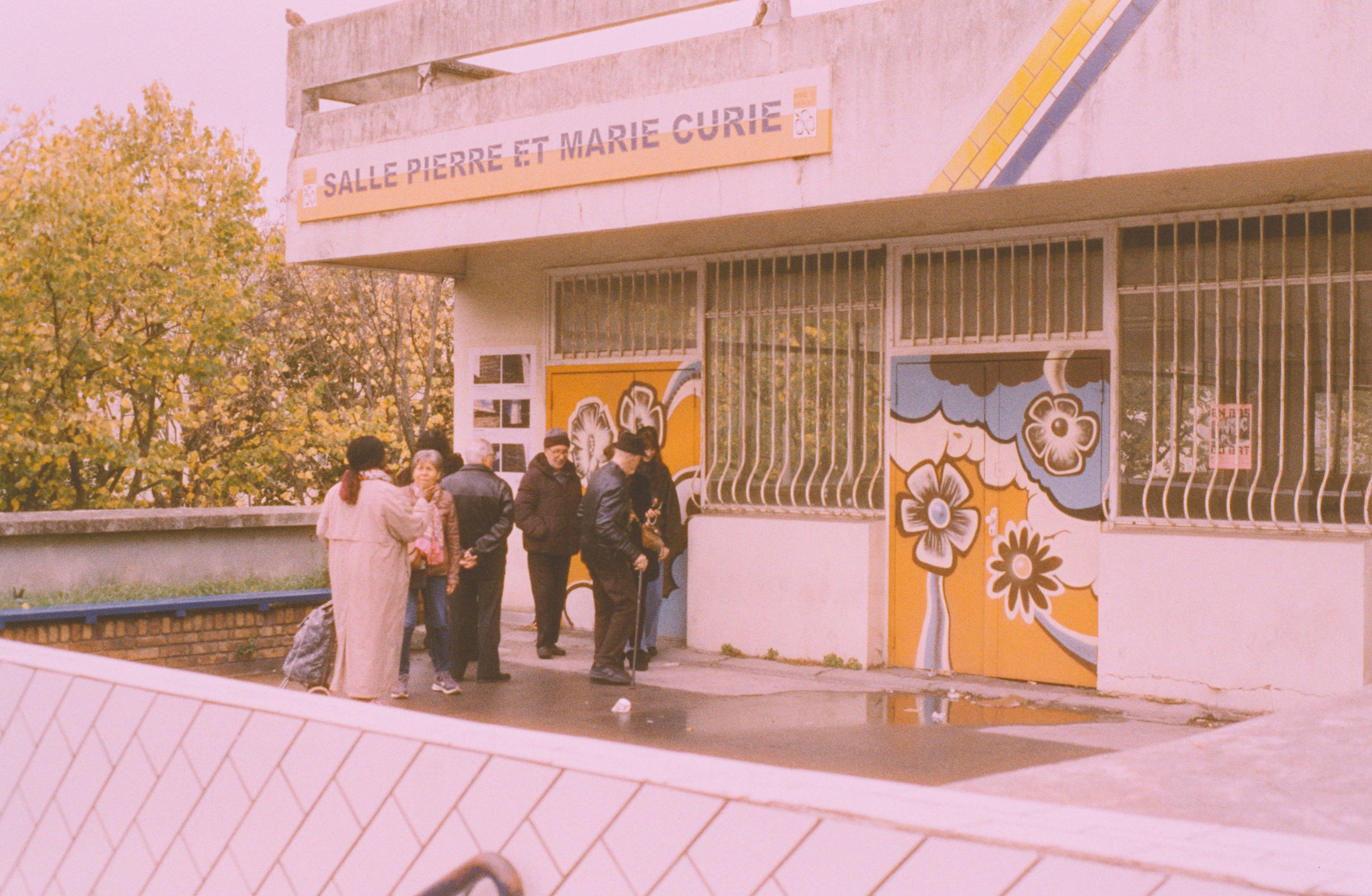
Co-creation is at the heart of our method. We do not offer a series of isolated workshops, but complete processes: meeting, inquiry, learning, production, selection, editing and curating, public presentation and archiving. Decision-making is shared at every stage, from choosing the subject to deciding what will be shown, to whom, where and in what forms.
Visual literacy runs through all our projects. In a world saturated with visual content, knowing how to make an image and knowing how to read one are inseparable skills. We pass on technical tools, such as framing, light, composition, sound recording and editing, while developing a critical eye: what an image reveals, what it erases, the power relations it can reproduce and the counter-narratives it can make possible.
This attention to representation is tied to our commitment against discrimination. The neighborhoods where we work often experience social, territorial, racial or cultural stigma. By working from the inside, participants can add complexity to how they are seen, make overlooked experiences visible and challenge the categories that box people and neighborhoods in. Artistic practice then becomes a lever for dignity, recognition and symbolic equality.
Memory and archives are another essential focus. Demolitions, rehousing, renovations, the loss of places where people used to gather, shifts in the social fabric: what is not documented from the inside risks being lost or replaced by official accounts. With residents, we build living archives that are accessible and can be passed on, linking memories, present-day uses and imagined futures.
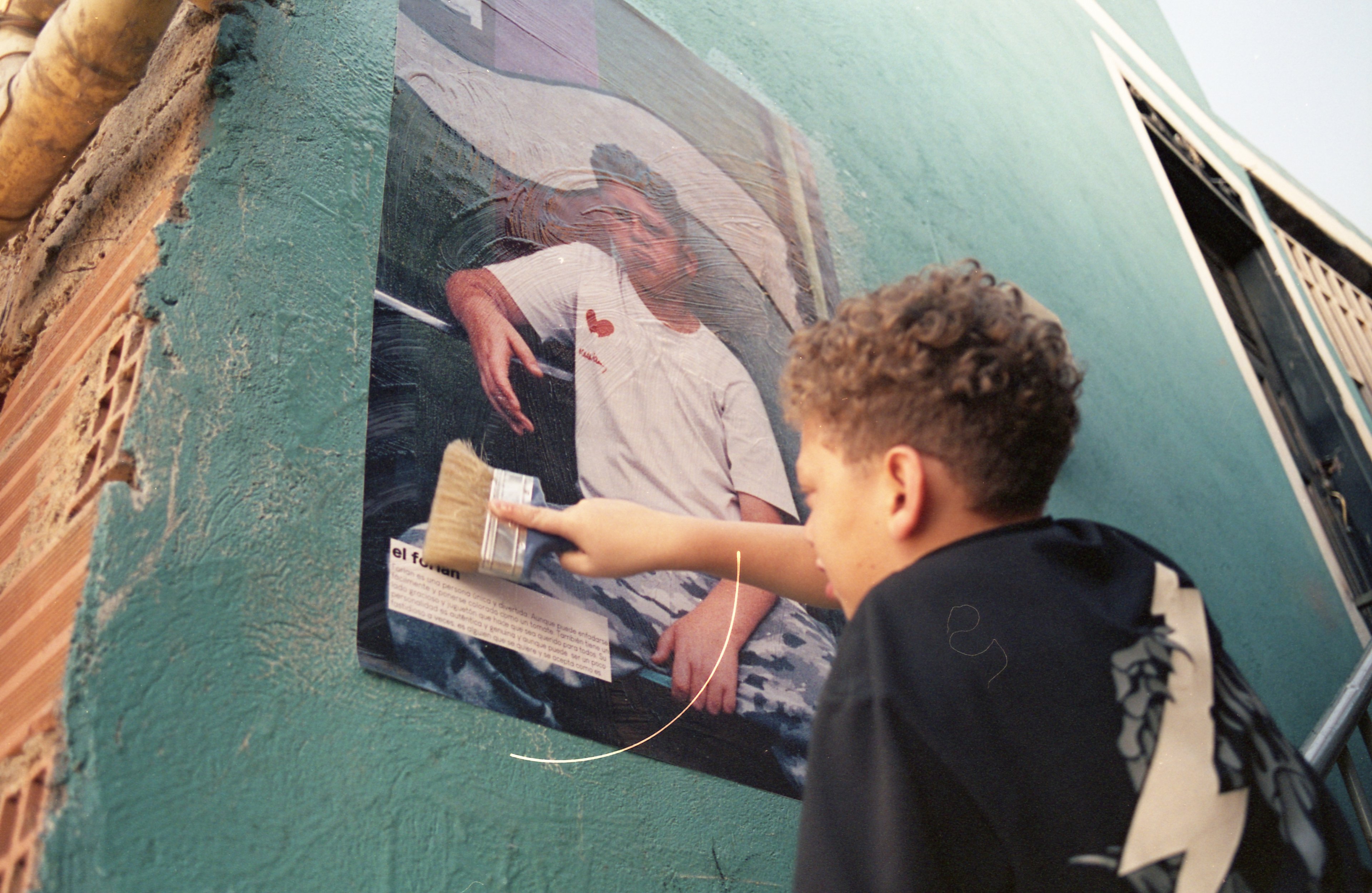
Finally, sharing back is a public act. Exhibiting on a concrete deck, screening a film, publishing a booklet, installing portraits in a street or letting voices be heard through QR codes gives a public presence to stories that would otherwise remain invisible. It also allows participants to see themselves differently, and invites others to enter the neighborhood through what is made there rather than through what is said about it from afar.
We work at a local scale, with a translocal ambition. From one project to the next, we are strengthening a method, an ethic and a network capable of connecting Île-de-France, Marseille and several places in Latin America and Algeria. Our conviction remains the same: the peripheries are not cultural margins. They become centers of creation, memory and invention when the means to produce, tell and pass on are truly shared.
since 2020
The organization was officially founded in 2020. In 2021, a first Point of View brought together residents of La Noue, in Bagnolet. Since then, the same method has been refined from one neighborhood to the next, in France and around the world.